


NEWS
K-12 Funding: 5 Tech Director Strategies for 2025 Shutdown

A government shutdown can feel like a distant news headline or policy storyline until it lands in your district’s budget. In October 2025, Congress failed to pass a long-term spending bill, triggering a shutdown that has already disrupted school operations. While forward-funded programs like Title I and IDEA are still safe, others such as Impact Aid for more than 1,000 federally impacted districts face immediate delays. For technology directors, this uncertainty compounds existing pressures: teacher shortages, rising superintendent turnover, and heightened expectations around cybersecurity and AI.
So how can you protect your district’s technology programs during a shutdown and beyond? Here are five practical strategies.
#1 How Can You Prepare for Funding Delays?
Even though most K-12 funds are forward-funded, delays in programs like Impact Aid can disrupt essential operations such as teacher salaries and utilities. Tech budgets, already stretched, can become easy targets for cuts or freezes.
Action steps:
- Map out which of your district’s funds are forward-funded vs. vulnerable to delays.
- Build a 60–90 day cash flow scenario for your technology department.
- Prioritize essential contracts (cybersecurity monitoring, filtering, student safety tools) and flag non-essential purchases for possible delay.
- Tie technology spending to clear student outcomes and cost metrics to strengthen funding requests.
- If possible, allocate small reserve funds for critical tech operations as a buffer against future delays.
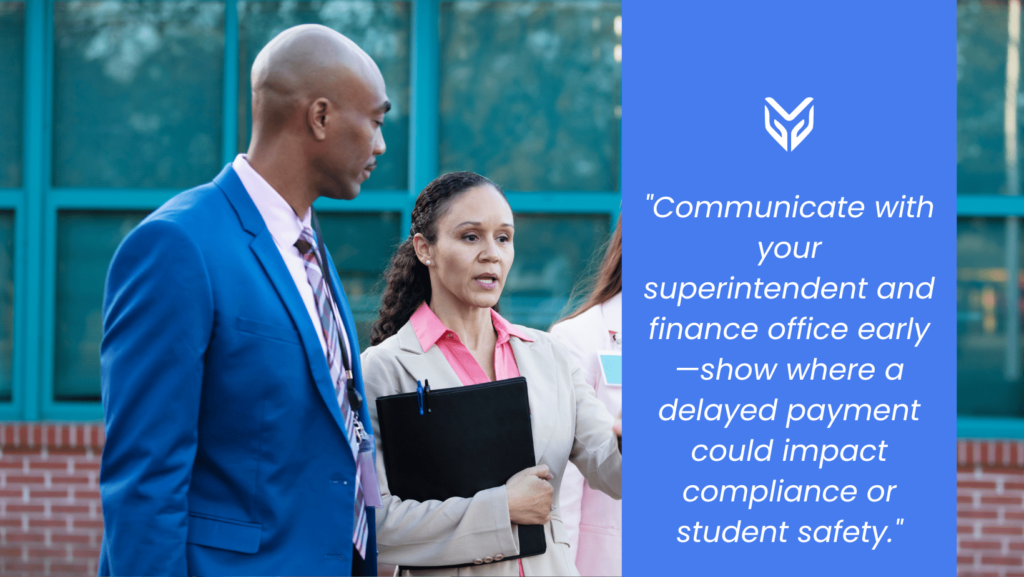
Pro tip: Communicate with your superintendent and finance office early—show where a delayed payment could impact compliance or student safety.
#2 Can You Use Data To Defend Your Budget?
With satisfaction with K-12 education at record lows in the U.S., and superintendents under extreme stress, directors of technology need to show their impact clearly. Funding decisions increasingly hinge on proof of value.
Action steps:
- Track device uptime, filtering compliance, and incident response metrics.
- Use your Admin Dashboard (or equivalent platform) to export analytics on student safety alerts, flagged issues, or classroom activity.
- Share monthly one-page summaries with district leaders. The goal: prove that tech isn’t just a cost—it’s preventing risk and supporting instruction.
#3 How Are You Handling Cybersecurity Threats in 2025?
Cybersecurity isn’t optional anymore. Traditional threats like ransomware and phishing remain, but now they’re joined by AI-driven tactics such as voice cloning and hyper‑personalized scams. Thus, proactive defenses and clear data governance are essential so schools don’t leave themselves vulnerable to costly disruptions and reputational damage.
Action steps:
- Conduct a cybersecurity self-assessment using free rubrics like the Cybersecurity Coalition for Education’s Cybersecurity Rubric.
- Establish clear data governance: what data is stored, where, and who has access.
- If staff bandwidth is limited, consider outsourcing cybersecurity detection and response to an AI-monitored provider that scans for threats around the clock. Think of it the way Blocksi’s student safety tools continuously monitor student devices for harmful activity—only here, the focus is on phishing attempts, ransomware, or data breaches.
#4 How Do You Balance AI Adoption With Safety?
State EdTech leaders ranked AI as the top technology priority for the first time this year, surpassing cybersecurity. At the same time, some widely used tools have been flagged as potentially unsafe for kids. The message is clear: districts must embrace AI strategically, not blindly.

Action steps:
- Pilot AI tools that support instruction, like automated quiz generation or plagiarism/AI-content detection.
- Block unsafe AI apps and enforce clear usage policies across school devices.
- Provide staff with guidance: when AI is appropriate (drafting rubrics, generating practice questions) and when it’s not (generating student feedback without review).
Tip for tech leaders: Frame AI adoption as a balance between innovation and protection. Parents and board members will be asking these questions in 2026—get ahead of them.
#5 How Do You Support Staff Under Pressure?
Superintendent turnover is high, and teacher shortages persist. In this environment, K-12 technology directors can play a stabilizing role by making classrooms run more smoothly and keeping teachers focused on instruction.
Action steps:
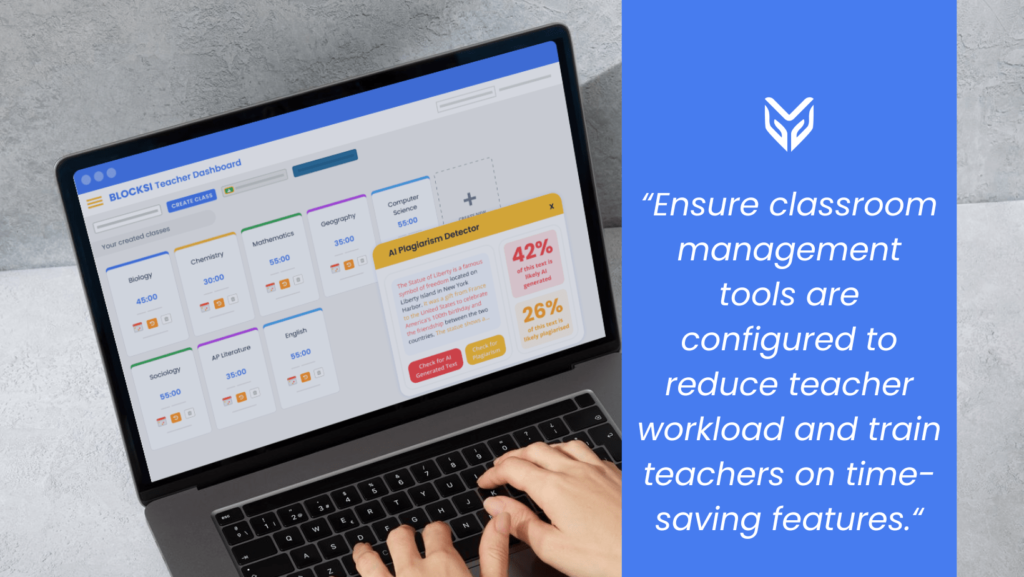
- Ensure classroom management tools are configured to reduce teacher workload (attendance tracking, tab controls, messaging).
- Train teachers on time-saving features, like scheduling assessments or auto-generating quizzes.
Conclusion: Resilience Is Your Best Strategy
A shutdown shows just how vulnerable school budgets can be. But it also gives technology directors a chance to demonstrate leadership by keeping core systems stable, using data to prove value, and guiding safe, responsible AI use.
Even if the 2025 shutdown isn’t directly disrupting your schools, K-12 funding pressures are always present. Staying focused on how technology supports student outcomes and district priorities is the best way to keep your programs protected and impactful through 2026 and beyond.
FAQ
Will my district lose all federal funding during the shutdown?
No. Most K-12 funding is forward-funded, so 2025–26 allocations are already in place. But Impact Aid, which supports districts located on or near federal lands, and some other grants may see immediate delays.
How long do shutdowns usually last?
Past federal government shutdowns have lasted from a few days to several weeks. Planning for at least 60 days of disruption is wise.
What are the cybersecurity threats K-12 tech departments must be ready for?
Districts face both traditional risks like ransomware and phishing, and new AI-driven tactics such as voice cloning and hyper-personalized scams. This means building proactive defenses and strong data governance is more critical than ever.
How should I talk about AI adoption in my district?
Emphasize both opportunities (efficiency, student engagement) and safeguards (blocking unsafe apps, guiding responsible use). Balance is key.
SOURCES
[1] How the Federal Government Shutdown Is Affecting Schools: A Tracker
[2] Record-Low 35% in U.S. Satisfied With K-12 Education Quality
[4] From Defense to Resilience: Where School Cybersecurity Goes Next
[5] SETDA: AI Beats Cybersecurity as Top State Ed-Tech Priority
[6] FTC investigating AI ‘companion’ chatbots amid growing concern about harm to kids
[7] Exclusive: Superintendent Churn Is Up, But More Districts Choose Women Leaders
[8] An Overview of Teacher Shortages: 2025
More to Explore

Follow Our Social Media Channels


