


NEWS
5 Top Benefits of Using AI Student Safety Tools for K-12

Keeping students safe—both in classrooms and online—has become one of the toughest challenges for today’s K–12 districts. Every day, students generate thousands of digital interactions across emails, chats, and search engines—and hidden among them may be early signs of distress, bullying, or even potential violence. Managing that amount of information manually isn’t realistic for any IT team or counselor.
That’s why more schools are turning to AI student safety tools. These systems monitor online activity, detect warning signs like self-harm searches or threatening language, and alert staff so they can act fast. They’re designed to support educators, helping them protect students more effectively.
AI-powered monitoring is no longer experimental; it’s now a key part of how districts keep students safe online for the 2025–2026 school year. Here are the five key benefits of using AI student safety tools in K–12 education.
Benefit #1: Early Detection of Self-Harm and Mental Health Concerns
One of the most impactful uses of AI in education is identifying early signs of distress. AI systems continuously analyze student search terms, documents, chats, and emails to detect worrying language patterns—such as expressions of depression, self-harm, or suicidal ideation.
A Director of Technology from Virginia, whose district uses Blocksi’s AI-powered student safety solution, shared this experience: “In the few months we have had Blocksi’s student safety feature, it has alerted us to several situations where students were feeling depressed and possibly considering self-harm.”
By catching these signals in real time, schools can intervene early, connecting students with counselors or parents before a crisis escalates.
Benefit #2: Accurate Alerts with Minimal False Positives
One of the biggest concerns with safety monitoring tools is alert fatigue: too many false alarms can overwhelm staff and reduce trust in the system.
Modern AI tools, however, use contextual understanding and natural language processing to distinguish between genuine threats and harmless phrases. For example, they can tell the difference between “I bombed my test” and a credible threat.
Platforms like Blocksi combine AI detection with human review, ensuring alerts are both accurate and actionable. This balance means fewer unnecessary notifications—and more time spent addressing real safety issues.
Benefit #3: Around-the-Clock Threat Monitoring and Faster Incident Response
Unlike human monitoring, AI tools don’t clock out. They work within school-managed accounts and devices, keeping a constant, responsible watch for potential risks. Their purpose is to help staff stay aware of student safety signals. These systems scan millions of interactions on school platforms every day, 24/7/365.
This level of always-on visibility gives IT and safety teams a massive advantage—threats are detected faster, alerts are routed instantly, and time-sensitive issues can be reviewed immediately by human staff.
A Supervisor of Safety & Security from Michigan shared their experience on using Blocksi for around-the-clock student threat detection: “Blocksi has allowed us to spot concerning patterns in students’ online behavior, enabling us to intervene early and offer support. By proactively connecting with these students, we’ve been able to provide the help they need before situations escalate.”
AI doesn’t replace human judgment—it gives educators an early heads-up, helping them recognize potential concerns before they escalate and focus their attention where it’s truly needed.
Benefit #4: Comprehensive Coverage Across Digital Platforms
Students use a wide range of digital tools daily—from Google Docs and Gmail to Microsoft Teams chats and shared drives. A strong student safety solution must therefore monitor all major digital learning environments and communication channels used by students on school-managed systems without invading privacy.
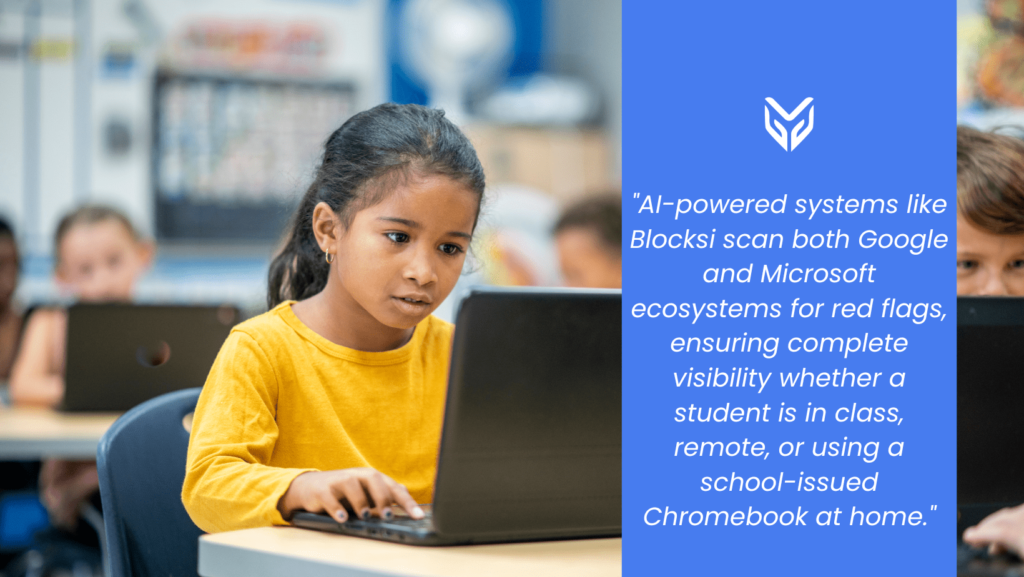
AI-powered systems like Blocksi do just that. They scan both Google and Microsoft ecosystems for red flags, regardless of device or location, ensuring complete visibility whether a student is in class, remote, or using a school-issued Chromebook at home.
By covering every platform where digital learning happens, schools can see the full picture of student behavior—not just fragments.
Benefit #5: Building a Proactive Safety Culture Across Your District
AI tools don’t just detect problems; they enable prevention. By revealing trends in student behavior, these tools help educators and administrators identify recurring risks, allocate resources, and improve mental health initiatives across the district.
As one principal from Arizona said: “The system monitors nearly every aspect of keystrokes, sites, and even a student’s scary or negative intentions. We don’t have to search for these issues; Blocksi sends us notifications.”
Schools using AI student safety monitoring aren’t just reacting to crises; they’re building safer and more supportive learning environments where every student’s well-being matters.
How Can Districts Balance Privacy With Safety?
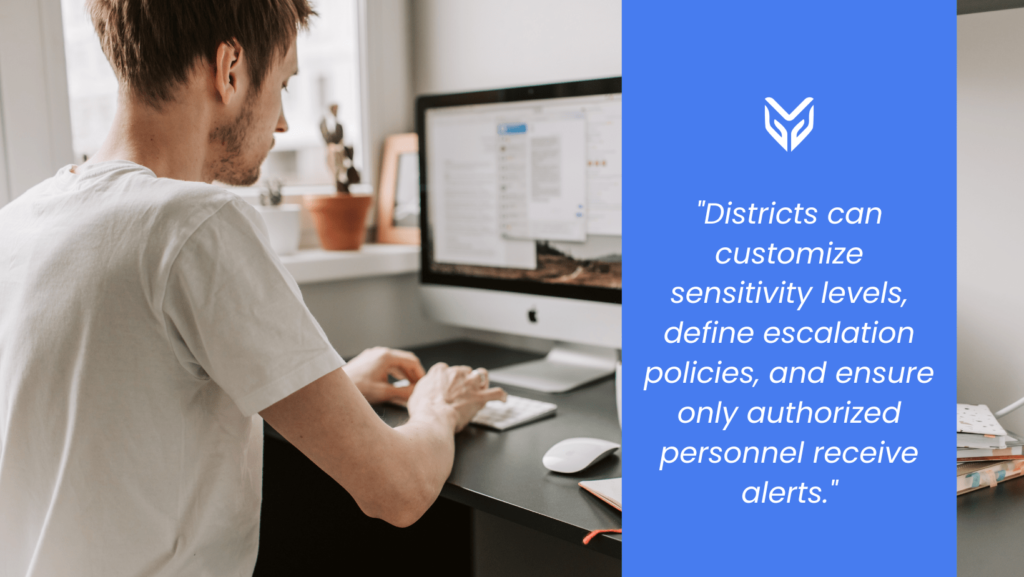
Privacy is a valid concern, and the best AI student safety tools are designed to respect it. Rather than reading personal data, AI focuses on patterns and indicators that suggest risk while keeping student information protected under strict compliance standards (like CIPA, FERPA, and COPPA). Districts can also customize sensitivity levels, define escalation policies, and ensure only authorized staff receive alerts.
Key Takeaway: Why AI Student Safety Tools Matter For K-12
AI student safety tools are no longer optional. Solutions like Blocksi combine advanced AI detection with human insight, giving districts a reliable way to stay ahead of risks and respond with confidence—they’re essential for modern K–12 safety management.
They help your district:
- Detect signs of self-harm or violence early
- Monitor student activity safely and ethically
- Reduce false positives through smart detection
- Enable proactive, data-driven interventions
With thousands of schools already on board, AI-driven safety monitoring is helping districts strengthen student protection while supporting the educators and staff who care for them. Districts looking to simplify and consolidate their digital safety can benefit from a comprehensive solution like Blocksi. It brings together student safety monitoring, content filtering, and classroom management—all in one platform designed for K–12 environments.
FAQ
How does AI detect self-harm or violence risk in student activity?
AI systems use pattern recognition and natural language processing to detect words, phrases, and context that indicate emotional distress, violence, or harm. Alerts are then reviewed by humans for accuracy before escalation.
Does student safety monitoring invade student privacy?
No. Reputable systems like Blocksi are built to align with FERPA, CIPA, and COPPA standards, focusing on identifying risk patterns rather than collecting private data.
Can AI replace school counselors or safety officers?
No. AI tools assist human teams, they don’t replace them. The goal is to help staff act faster and focus their attention where it matters most.
Is this monitoring limited to Chromebooks?
No. Blocksi works across operating systems and integrates seamlessly with Google Workspace and Microsoft 365.
SOURCES
[1] Staying One Step Ahead: How to Protect Kids from Emerging Online Threats
[2] What the Massive Shift to 1-to-1 Computing Means for Schools, in Charts
[3] Is Student Behavior Getting Any Better? What a New Survey Says
More to Explore
Follow Our Social Media Channels


