


NEWS
A How-To on Suicide Prevention for School Leaders
When a student is struggling, it doesn’t always show. A drop in grades. Silence in class. Unusual behavior online. These small signs might be easy to miss, but they can be early indicators that a student needs help. In schools, recognizing and responding to these signals is the first step in suicide prevention.
Students face a mix of pressures—and when online threats like grooming and bullying are added, everyday stress can become something far more serious. With 1 out of every 5 K-12 students experiencing bullying, and mental distress being a key early sign of suicidal ideation, recognizing and addressing these issues early is critical.
Identifying Student Struggle: Spotting Early Warnings
Struggle looks different for every student. Some withdraw. Others act out. You might notice changes in attendance, sudden disengagement, or concerning messages in online activity. These aren’t just behavior issues—they can be cries for help.
By understanding what distress looks like and knowing what to do next, you help create a safety net. Schools that build awareness into daily routines—through training, peer support, and monitoring tools—are better equipped to step in early.
The Role of Student Safety Alerts
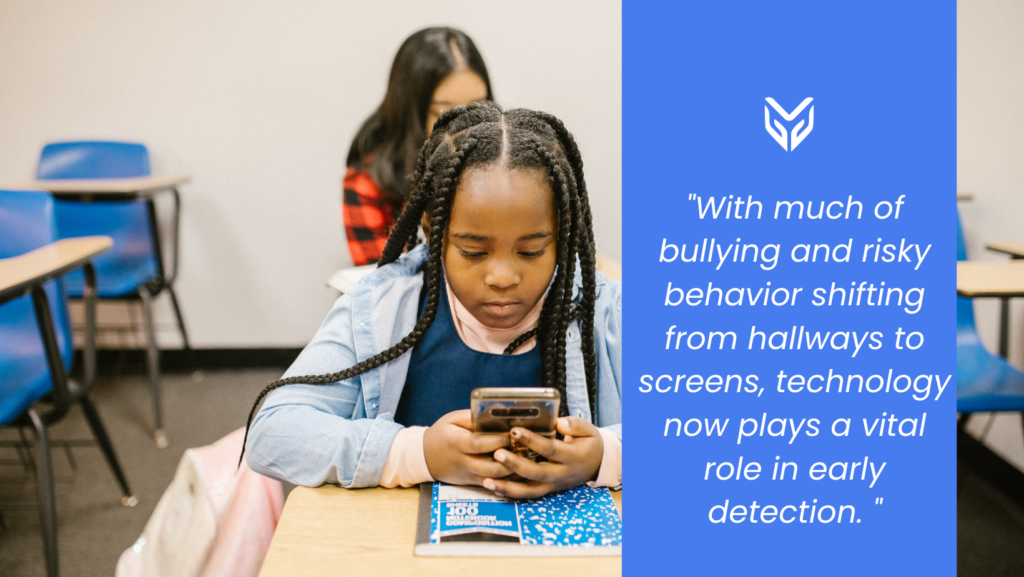
With much of bullying and risky behavior shifting from hallways to screens, technology now plays a vital role in early detection. Student safety alerts use AI and keyword tracking to flag signs of self-harm, violence, or grooming.
These tools don’t replace people. They support teachers and counselors by adding another layer of insight—especially in digital spaces where students often share what they’re not ready to say out loud.
Identify Online Grooming and Hidden Threats
Online grooming is hard to spot. It happens in chats, forums, and DMs—often without a parent or teacher noticing. It starts with trust, and it can escalate quickly.
That’s why schools must know how to identify online grooming patterns early. Tools that monitor suspicious messages or behavior can catch red flags quickly. Combined with human judgment, this makes early detection a crucial part of suicide prevention.
Suicide Prevention Starts with Listening
Prevention isn’t about reacting when it’s too late. It’s about building a culture where students feel safe to speak up. It’s about noticing when they go quiet. And it’s about checking in when something seems off.
Sometimes, it’s a trusted adult who asks the right question. Sometimes, it’s a tech alert that brings something to light. What matters is that someone sees it and acts.
Schools can prevent suicide by combining human care with smart tools, consistent training, and strong policies.
FAQ: Suicide Prevention and Student Wellbeing
What are the early signs of a student struggling with mental health?
Changes in mood, behavior, or routine. Sudden drop in performance. Isolation. Changes in online behavior. Any of these could signal that a student needs support.
How can technology help with suicide prevention?
Monitoring tools and safety alerts help staff catch warning signs in online activity. They offer real-time insights into student wellbeing without replacing human interaction.
What is a student safety alert?
A student safety alert is an automated notification that flags content or behavior suggesting self-harm, violence, or other risks. Schools use it to identify at-risk students sooner.
How can schools identify online grooming?
By using tools that monitor digital communication for red flags—like suspicious messages, age-inappropriate language, or repeated contact attempts. Here’s how it works.
Why is early intervention important?
Because timing matters. Catching signs early can prevent harm, guide support, and save lives. Early support helps students feel seen and supported before things escalate.
What should educators do when they notice warning signs?
Document the behavior. Alert your school counselor or safety team. Don’t ignore signs or assume someone else is handling it.
Real prevention starts with showing up, paying attention, and acting early. It’s about creating an environment where no student feels invisible.
SOURCES
[2] The Importance of Mental Health Awareness in Schools
[3] Online grooming and child sexual exploitation in the U.S.
Follow Our Social Media Channels


