


NEWS
K–12 Cellphone Bans and Other Classroom Distractions

Across the country, schools are taking stronger action to reduce distractions and reclaim focus in the classroom—most notably through widespread cellphone bans. As of May 26, 2025, at least 26 U.S. states have passed laws banning or restricting cellphone use in schools. The scope varies by state: while some implement full-day bans, others limit phone use specifically during class time. An additional 8 states and D.C. have offered guidance to local districts on student phone use.
Most recently, Alabama passed the FOCUS Act, joining a growing national movement to reduce digital distraction in schools. The reason? The results are hard to ignore.
In schools that have banned or restricted phones, educators report a clear shift in school culture: students are more engaged, social interaction has improved, and learning environments feel more connected. One Iowa high school saw A’s and B’s increase by 14%, while the failure rate dropped by half following a phone ban.
In a time where screens compete for attention 24/7, these improvements really stand out. Gen Z spends an average of 6 hours and 27 minutes on their phones daily, with 7 in 10 admitting to being addicted. With constant access to notifications, messaging apps, and social media, phones can be a constant pull on student attention.
Limiting Phones Boosts More than Learning
The response from schools has been substantial. As of this year, 77% of public schools prohibit students from using phones during any class time. Notably, 38% of schools extend their restrictions to non-instructional time, such as lunch, hallway transitions, and extracurriculars.
Still, phones aren’t the only source of distraction.
Even with policies in place, students still access distractions and risky content. They use school-managed devices like Chromebooks and laptops, find VPNs and browser workarounds, or spend time on messaging platforms and online games.
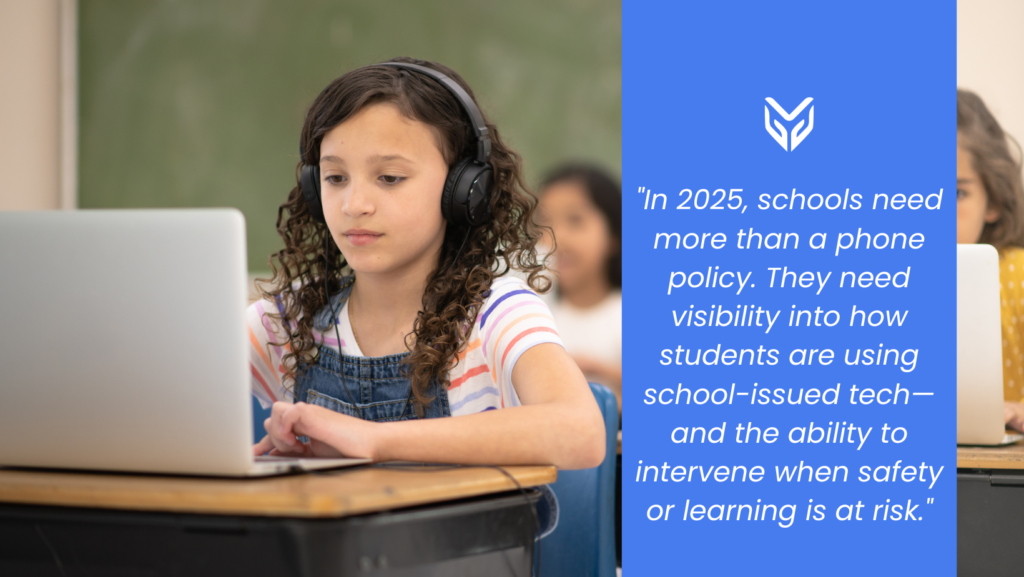
In 2025, schools need more than a phone policy. They need visibility into how students are using school-issued tech—and the ability to intervene when safety or learning is at risk.
A Smarter Approach to Managing Distractions
While cellphone bans are a strong first step, they don’t replace the need for real-time monitoring and digital student safety. Solutions like Blocksi give educators the ability to:
- Monitor screen time and online activity
- Flag risky behavior like cyberbullying, self-harm, or inappropriate content
- Keep students on-task and engaged—even on approved devices
To really protect focus and safety, schools need more than phone bans. It’s about combining:
- Phone policy enforcement
- Classroom management tools
- AI-powered alerts for safety and behavioral concerns
- Digital citizenship education for students
Whether your district has already implemented a cellphone ban or is still weighing the idea, now is the ideal moment to think ahead. Let technology work with you—not against you.
Schedule a free Blocksi demo to see how you can support educators, protect students, and keep learning on track—no matter the device.
SOURCES
[1] Map: Which states have banned cell phones in schools
[2] Governor Ivey Signs “FOCUS Act” Preventing Use of Cell Phones in Alabama Public Schools
[3] More and more states hang up on K12 cellphones
[4] Half of Americans Feel Addicted to Their Phone as Gen Z Screen Time Tops 6 Hours/Day
[5] More than Half of Public School Leaders Say Cell Phones Hurt Academic Performance
Follow Our Social Media Channels


