


NEWS
How to Identify Online Grooming for K-12 Schools

Online grooming usually starts out looking harmless. It may start as a friendly reach-out, quick chat, or a shared interest. But it slowly turns manipulative and secretive. Grooming happens when someone builds trust with a student for the purpose of exploitation. It might start on gaming platforms, chat apps, or even school-based tools.
What makes grooming tricky is that it blends in. It doesn’t always look dangerous. But over time, you’ll notice signs: secrecy, isolation, sudden mood shifts, or students hiding screens when adults are nearby.
Why Schools Need to Know the Signs
School staff are in a unique position to catch early signs of grooming. Most students won’t speak up right away—if ever. But changes in behavior, unusual online activity, or emotional shifts can be early clues. And with much of students’ lives happening online, grooming often plays out digitally—sometimes right on school-managed devices.
Here are some of the red flags:
- A student becomes unusually secretive about their online activity.
- A student is constantly distracted during class or emotional after being online.
- You notice students chatting with someone who seems much older or who pressures them for private conversations.
Tools like Blocksi’s K-12 threat detection with accurate student safety alerts can help flag risky behavior early. These systems scan student emails, chats, searches, and other digital footprints for concerning content. When something stands out—like manipulative language or messages pushing secrecy—staff get notified and can step in.
Student Safety Alerts: The First Line of Defense
Safety alerts aren’t just about detecting bad words. The smartest systems look at context—what came before and what followed. A single phrase might mean nothing on its own. But with the full conversation in view, it can paint a much clearer picture.
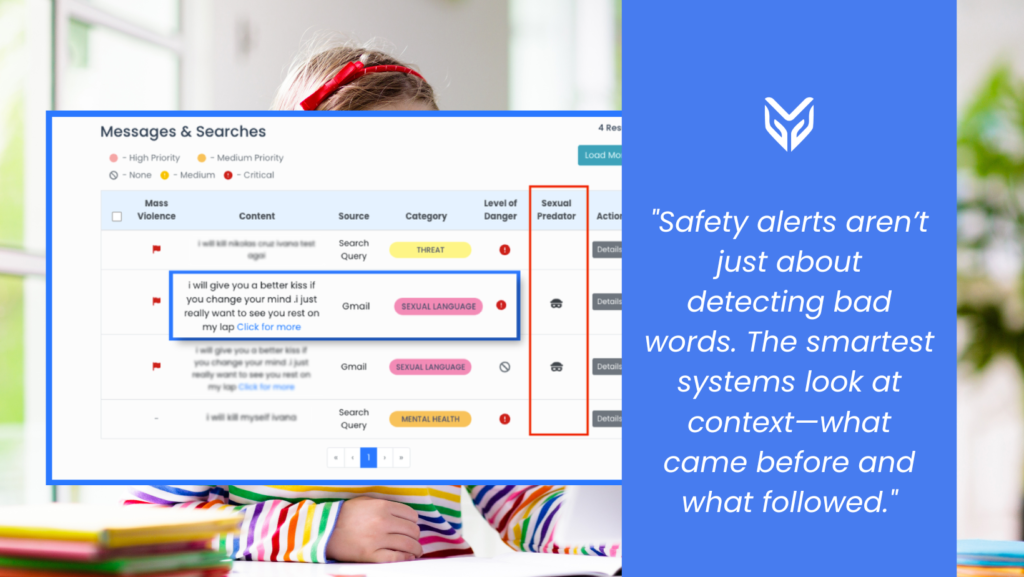
And when alerts go to the right people at the right time—whether that’s a school counselor, tech admin, or designated staff member—intervention can happen before a student ends up in serious danger.
Don’t Miss the Bigger Picture
Online grooming doesn’t happen in a vacuum. It often goes hand-in-hand with other red flags like:
- Bullying
- Expressions of distress or hopelessness
- Risky or isolated behavior
When schools focus on the full picture—not just one red flag—they’re in a better position to catch students who need support. In fact, over six in 10 children with access to the internet interact with “unknown others” online every day. That makes it even more important to connect behavioral signs with digital activity before anything dangerous happens.
Support Your Students Before They Reach a Crisis Point
Worrying statistics show suicide is the second-leading cause of death for teens and young adults. And while grooming is just one piece of the puzzle, students in distress often leave clues across their digital lives. From search history to email content, these signs can be spotted early—but only if someone’s paying attention.

A smart student safety system can:
- Flag self-harm searches (e.g., “How to disappear”, “I can’t take this anymore”)
- Detect disturbing or manipulative messages
- Alert trusted staff for a timely follow-up
With the right mix of awareness, smart tools, and quick action, schools can step in before things spiral. Staying quiet can’t keep students safe. Knowing what to look for and taking action can.
Digital Threats Don’t Wait, and Neither Should You
Grooming thrives in silence. But when educators know what to look for—and have systems that back them up—that silence breaks. You don’t need to monitor every word or guess every motive. But you do need tools that help identify patterns and connect the dots.
Find out how to stay present and meet the students where the risks are. 👇
SOURCES
[1] TWO-THIRDS OF CHILDREN INTERACT DAILY ONLINE WITH PEOPLE THEY DON’T KNOW DESPITE GROOMING FEARS – REPORT
[2] Mental Health and Suicide Statistics
Follow Our Social Media Channels


